
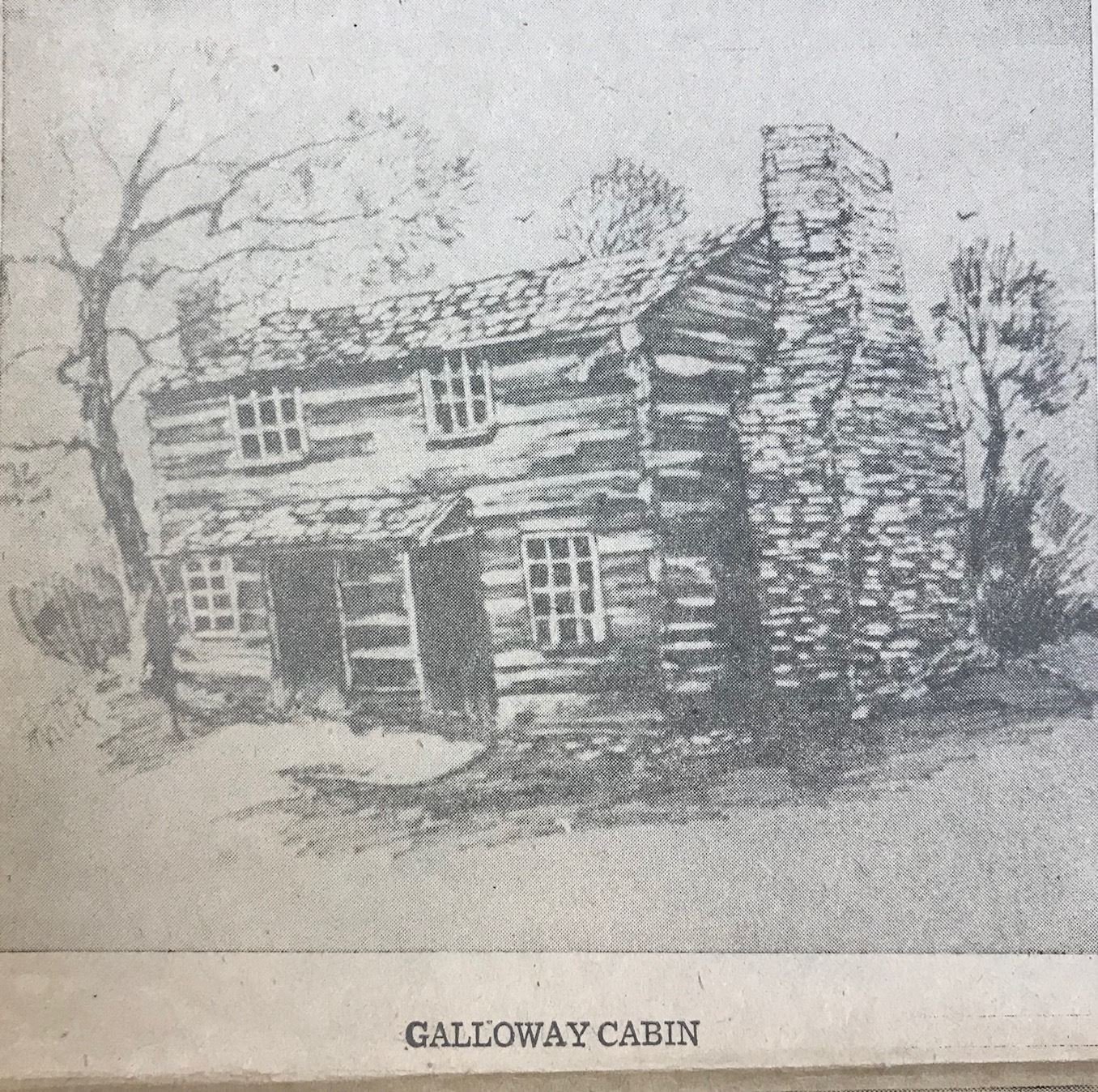
Fig 1. Sketch by Robert L. Mauck of the Galloway Cabin (Greene County Archives)The Galloway cabin is probably one of the most well-known structures in Xenia, and probably Greene County. The cabin was constructed by James Galloway Sr. in 1799, after he and his family moved from Kentucky to the area. The Galloways settled near Goes Station, which later would become part of Xenia Township.
The land, including the cabin, stayed in the Galloway family for many years. After James Galloway Sr. died in 1838, the property went to his heirs. However, in 1841, Anthony Galloway, one of Galloway’s sons, took full ownership of the land. Anthony held the property for many years, but in 1854, sold to David Gish. Gish and his brother had bought a few properties around that time, but they did not keep them long. In 1857, the land changed hands three times – it went from David Gish to Dennis Cosley, Cosley to Basil Lucas, and Lucas to George, William, and Andrew Holland – and this is where we have a little side story…
George, William, and Andrew were children of Daniel and Maria Holland. Daniel was a slave owner from Charleston, South Carolina, and Maria was one of his slaves. Daniel fathered three children with Maria, and after freeing Maria and their sons, he brought them to Ohio to live (Fig 2). He purchased a large tract of land near Wilberforce, which is where the children gained an education (although not all of them graduated). The brothers did well for themselves, and as previously stated, together bought the large piece of land that included the Galloway cabin. Hallie Q. Brown makes mention of the Holland family in her book, Pen Pictures of Pioneers of Wilberforce (Fig 3).
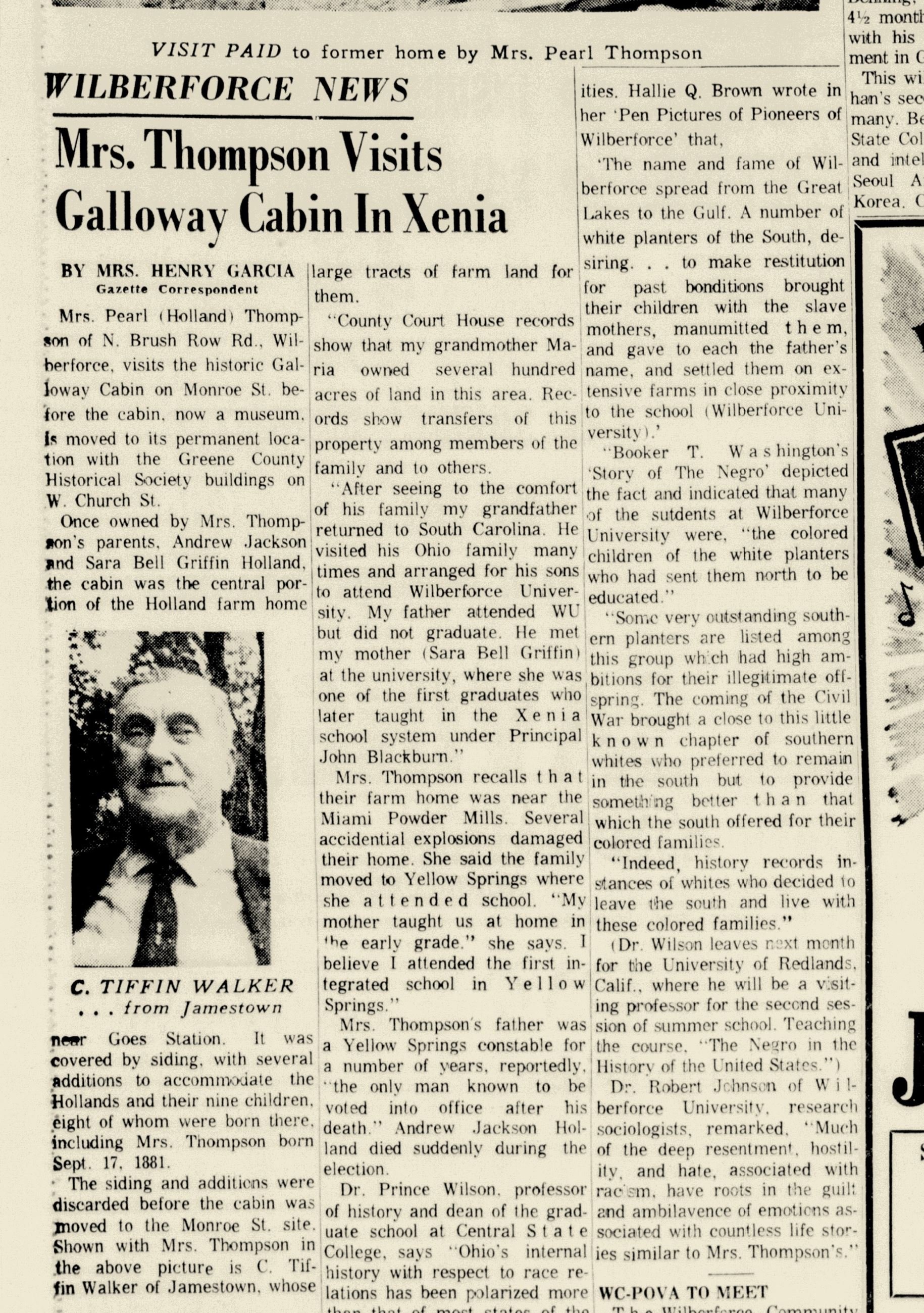
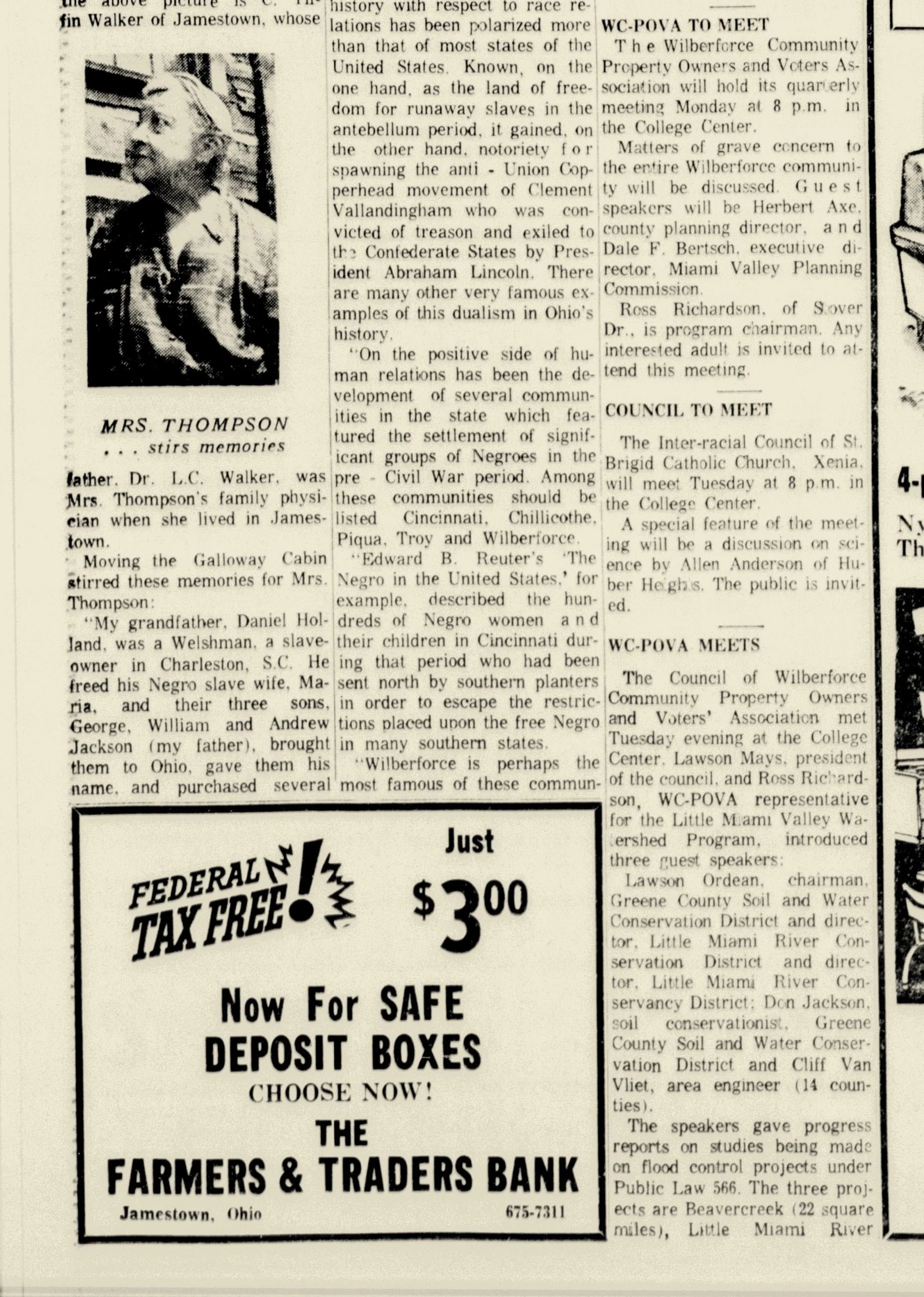
Fig 2. Article from the Xenia Daily Gazette, dated July 9, 1965 (NewspaperARCHIVE.com)The brothers shared the land for many years, but when William died unexpectedly in 1870, he left the other two to decide how to parcel the land. George and Andrew split the land in 1871, each taking full ownership of their individual parcels. Andrew, along with his wife Sara, raised their family in the Galloway cabin (Fig 4). One article claims that of their nine children, all but one was born in the cabin.
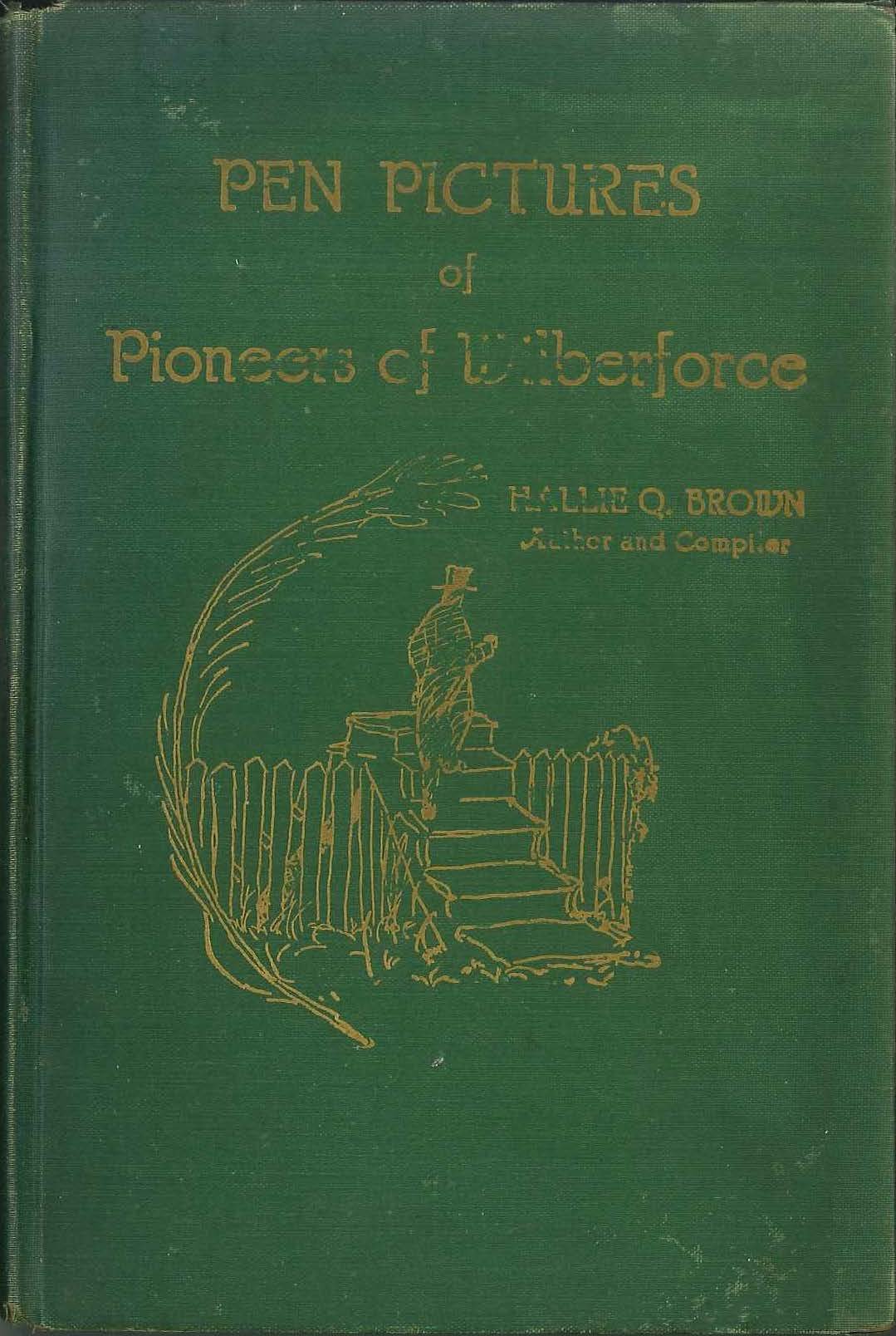
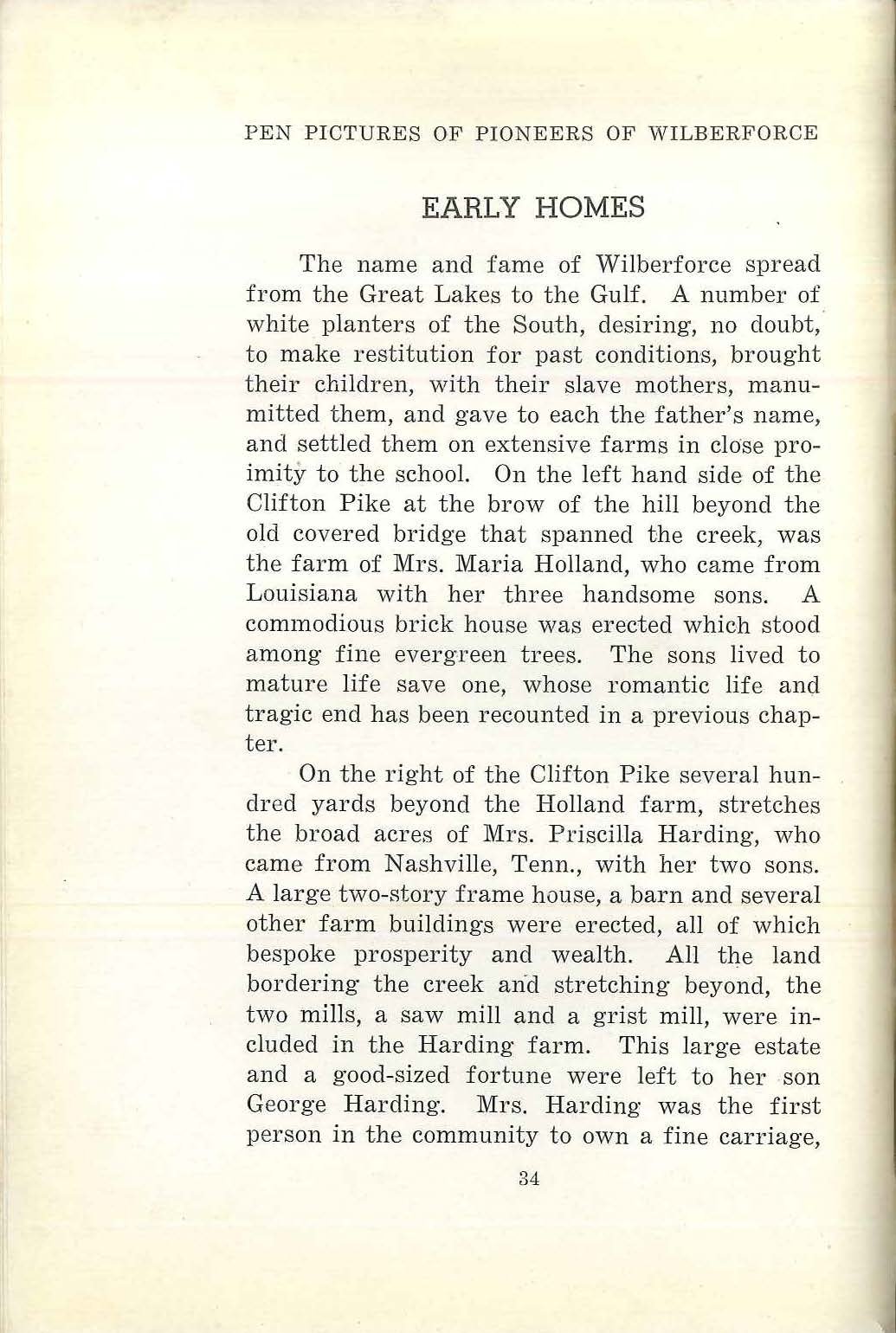
Fig 3. Excerpt from Pen Pictures of Pioneers of Wilberforce (Greene County Archives)The brothers shared the land for many years, but when William died unexpectedly in 1870, he left the other two to decide how to parcel the land. George and Andrew split the land in 1871, each taking full ownership of their individual parcels. Andrew, along with his wife Sara, raised their family in the Galloway cabin (Fig 4). One article claims that of their nine children, all but one was born in the cabin.
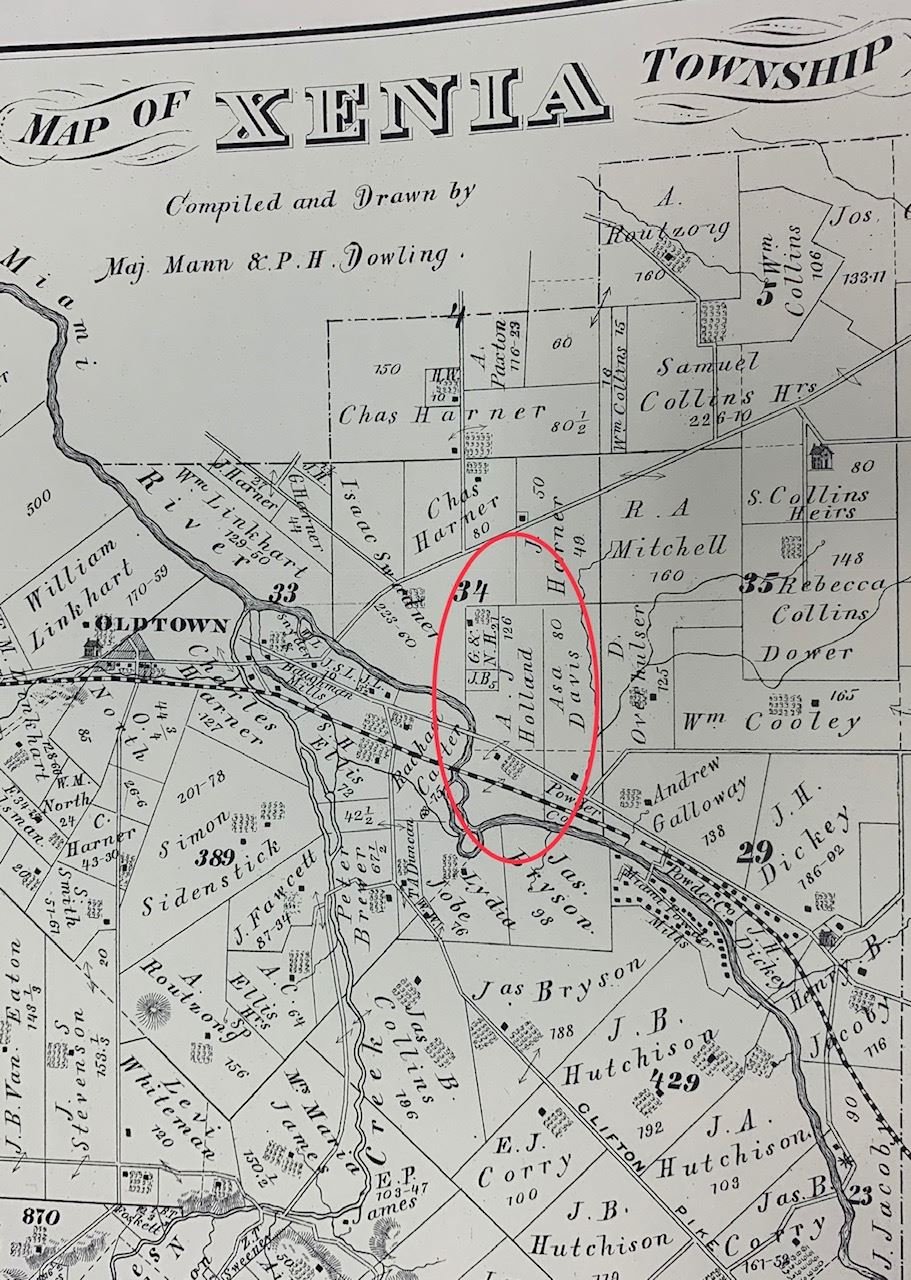
Andrew Holland and his family moved to Yellow Springs, but he kept his land near Goes Station. In 1874, George Holland sold his tract to the Miami Powder Co. Andrew sold off pieces of his land over the years, and in 1881, sold 20 acres to the Miami Powder Co., and we believe that it is this tract that housed the Galloway cabin.
Over the years, the Miami Powder Co. changed ownership many times. When the site closed for good in 1925, the site was known as the Hercules Explosive Corporation. The 1927 tax records indicate that they sold all their property to E. H. Hunt (Fig 5).
Fig 4. 1874 Greene County Atlas with A. J. Holland land circled in red (Greene County Archives)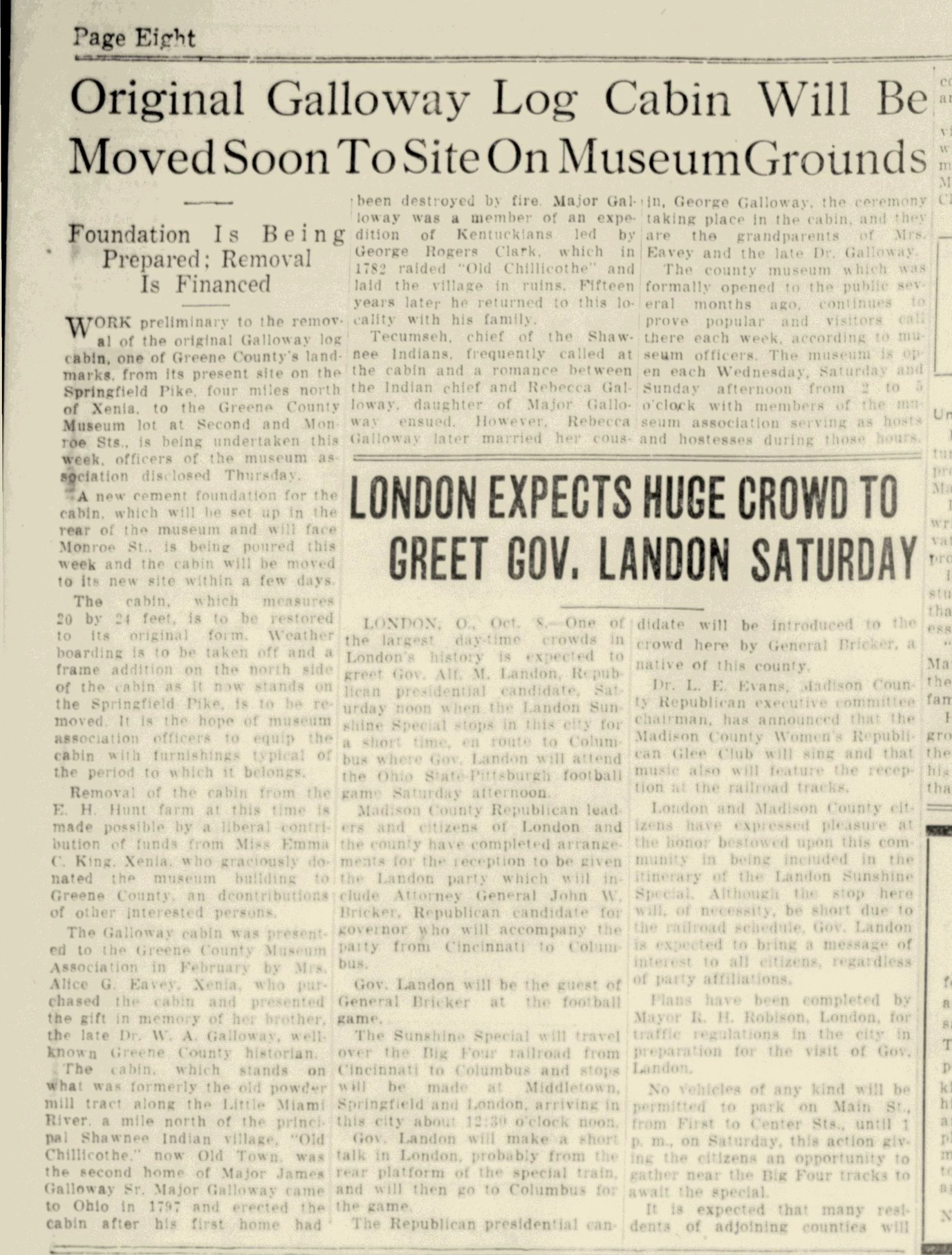
Fig 5. Article from the Xenia Evening Gazette, dated October 8, 1936 (NewspaperARCHIVE.com)Although the property changed hands over the years, the cabin remained. In the 1930s, there was a push to make the cabin part of the Greene County Museum Association (now the Greene County Historical Society). To make this dream a reality, two women were of vital importance – Emma King and Alice Galloway Eavey. King donated the land at the corner of Second and Monroe streets, and Eavey purchased the cabin and donated it to the Association (Fig 6).
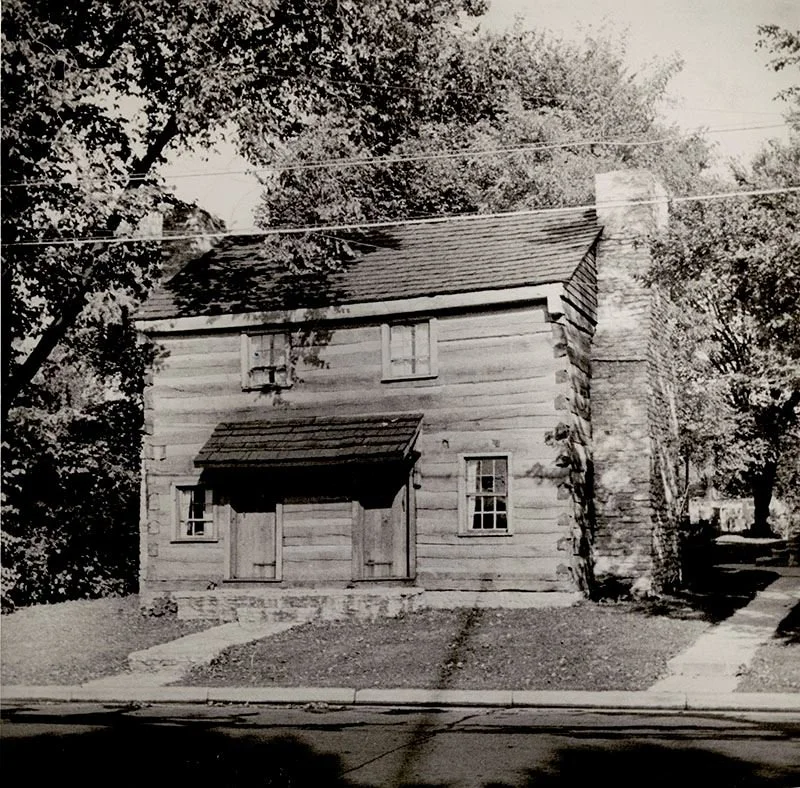
ig 6. Galloway cabin in 1938 (Courtesy of the Dayton Daily News Archive, Wright State University)The cabin remained on the premises for a couple decades, but in 1965, the Historical Society moved to a new complex. At that time, the cabin was relocated to West Church Street (Fig 7), where it remains today. The cabin did sustain serious damage in the 1974 tornado, but the Society was able to salvage it, preserving it for future generations.
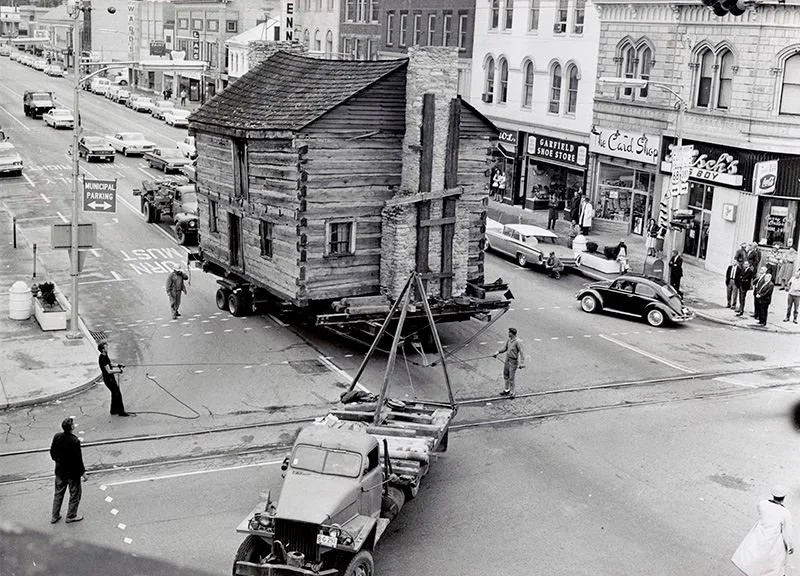
Fig 7. Galloway cabin being moved in 1965 (Courtesy of the Dayton Daily News Archive, Wright State University)
Our History…
-
Formation FEB 6, 1929About 100 Greene County residents met at the Greene County District Library with Dr William Albert Galloway presiding over the meeting. He spoke briefly of highlights in Greene County history, and of the danger of losing such a wealth of personal and general history unless it were collected by organized effort. The first officers of the Greene County Historical Society were: Dr. W. A. Galloway, President; Prof. H. C. Aultman, Vice President; Miss Florence Swan, Secretary; and Mr. George Dodds, Treasurer
-
Historical Marker 1930A historical marker was placed at Old Town, site of the Shawnee village Old Chillicothe, with the help of Thomas Wildcat Alford of Oklahoma, a descent of Tecumseh.
-
Museum Created APR 1930King House Donated. Miss Emma King donated a house and lot at the corner of Second and Monroe Streets in Xenia to the county commissions for a museum. In response to this generosity, the Greene County Museum Association was organized, and the house was remodeled and fireproofed by the Works Progress Administration (WPA). The County Commissioners agreed to fund the museum's operating expenses in 1935. The original Museum Association officers were: Dr. Benjamin R. McClellan as President, as well as Fred Anderson, C. R. Titlow, R. O. Wead, Katherine Shorey, and Mrs. Wilson Galloway.
-
Galloway Home Moved JUL 7, 1937Galloway Home moved from Goes Station
In 1936, arrangements were made to move the Galloway Log House from it's original location near Goes Station to the lot at the corner of Second and Monroe. It was reopened for visitors on July 7, 1937. -
100th County Fair 1939County Pageant held
The Greene County Agricultural Society celebrates the 100th anniversary of the Greene County Fair with a pageant commemorating the county, in which members of the Historical Society took an active part. The original Museum Association officers were: Dr. Benjamin R. McClellan as President, as well as Fred Anderson, C. R. Titlow, R. O. Wead, Katherine Shorey, and Mrs. Wilson Galloway. -
County's 150th Birthday 1953Museum Association combines with Historical Society
The Historical Society took part in the joint 150th birthday celebrations of the state and count by repairing the log house and helping with the publication of the book, "Out of the Wilderness." The Greene County Museum Association decided to merge with the Greene County Historical Society, transferring all of the Museum Association's property and entrusting the property's care to the Historical Society. The Historical Society also provided an exhibit in the Greene County Fair for the first time. -
Growth of Museum 1954-1973Four-Building Complex Established
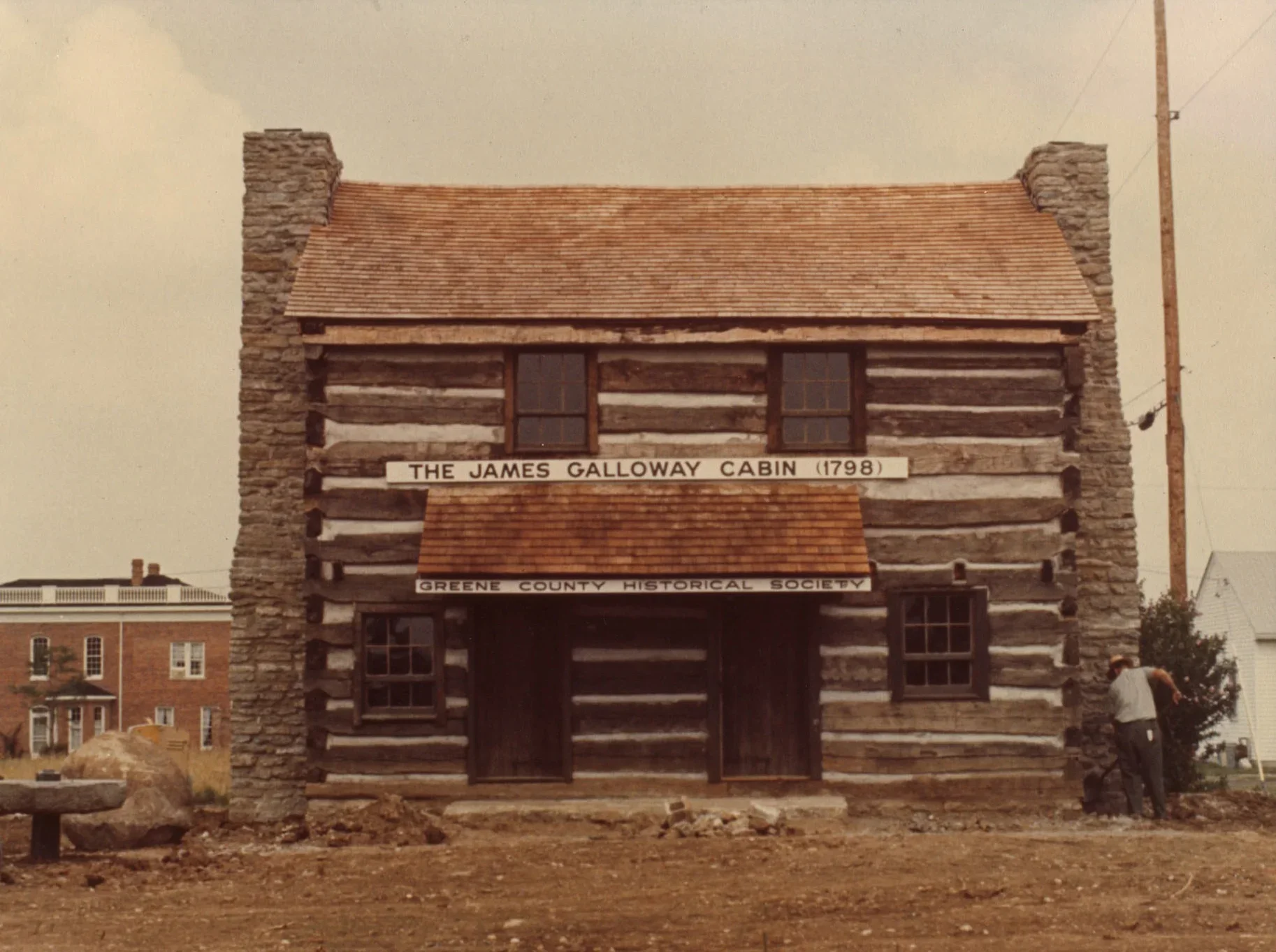
An expansion of the Historical Society's property was made possible by the donations of Charles Snediker of Fairborn and John Glossinger of New York via Xenia, and the property at the corner of West Church Street was acquired. The Historical Society complex comprised: William G. Moorehead house at the corner of North Detroit and West Church, which held artifacts Snediker Museum, a brick carriage house on the Moorehead property which housed pioneer tools and implements John Glossinger Culture Center, which was used for meetings and contained the offices of the Historical Society Galloway Log House, which was moved to this location in 1965 -
Major Exhibits Hosted 1954-1973Louis F. Clark brings special collections
Mr. Louis F. Clark took office as the Society president in 1970; at which time the Society also hired its first full-time director, Andrew Jaros. In October 1971, a moon rock collected by Apollo 12 was displayed in the Snediker museum in an exhibit prepared by NASA. Another notable display during Mr. Clark's tenure was a showing of work by world-renowned photographer and Yellow Springs resident Axel Bahnsen. When Mr. Clark retired, Dr. Richard Thomas assumed the presidency and hired Mrs. Peggy Shoals as Executive Secretary. Mrs. Shoals roomed in the upstairs of the Glossinger Center and also served as hostess. -
Xenia Tornado APR 3, 1974Historical Society sustains major damage
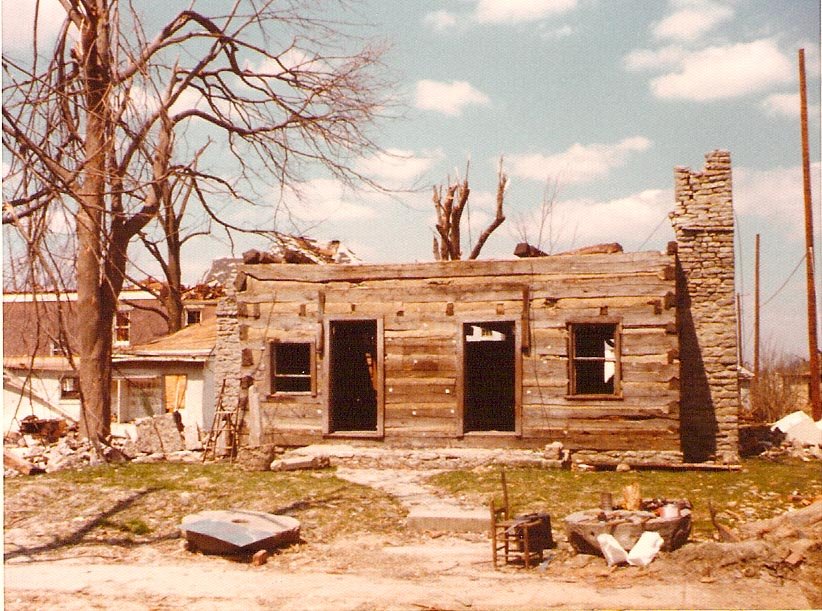 In the afternoon of April 3, 1974, Xenia was struck by an historic F5 tornado that tore through the center of town - including the four buildings of the Greene County Historical Society.
The Galloway Log House was the only of the four buildings to ultimately survive, although heavily damaged. The Glossinger Cultural Center, Moorehead House, and Snediker museum were destroyed.
In the afternoon of April 3, 1974, Xenia was struck by an historic F5 tornado that tore through the center of town - including the four buildings of the Greene County Historical Society.
The Galloway Log House was the only of the four buildings to ultimately survive, although heavily damaged. The Glossinger Cultural Center, Moorehead House, and Snediker museum were destroyed. -
Restoration 1975Putting the pieces back together
Joan Baxter joined the Historical Society staff as secretary, and Dr. Thomas resigned as president due to the demands of his architecture business. Delmer Bone took over as the President and guided the Society through the process of rebuilding. A grant was obtained to restore the Galloway Log House, which was the primary and immediate goal. During the restoration, offices were temporarily housed at the Greene County District Library annex, and artifacts saved from the damaged buildings were stored in various locations such as old warehouses and members' homes. Membership meetings were held in various places throughout the county - and not one was missed! The Galloway Log House was reopened to the public in December 1975. -
Queen Anne House 1977A trade with the city to preserve history
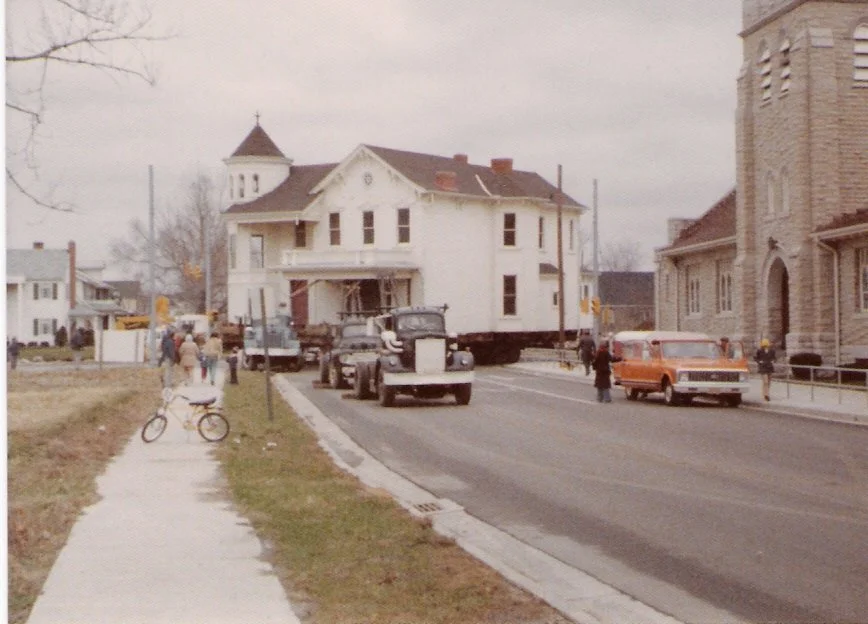 As part of the restoration work after the tornado, the Historical Society came to an agreement with the city of Xenia to trade a portion of their property for the Queen Anne Victorian house at the corner of Detroit and Church Street. This house, now known as the Trebein-Flynn Victorian, was relocated to the corner of Church and King, placing it next to the log house where it remains to this day.
The move took two days and was completed by the Paul Gertler Co. of Reynoldsburg at a cost of around $15,000 (about $75,000 now).
As part of the restoration work after the tornado, the Historical Society came to an agreement with the city of Xenia to trade a portion of their property for the Queen Anne Victorian house at the corner of Detroit and Church Street. This house, now known as the Trebein-Flynn Victorian, was relocated to the corner of Church and King, placing it next to the log house where it remains to this day.
The move took two days and was completed by the Paul Gertler Co. of Reynoldsburg at a cost of around $15,000 (about $75,000 now).
Complete reconstruction of historic log cabin in Xenia, Ohio, after it had been destroyed by a tornado. The cabin had been built by Jame Galloway, and early settler in Goes, Ohio in 1798, and it was moved to Xenia during the 20th century. Some of the historic interest in the cabin stems from the Galloway family's friendship with the famous Native American chief, Tecumseh, who for a period of time was a frequent visitor. The design and construction work was a ground up rebuilding, using materials saved from the destroyed cabin as well as materials salvage elsewhere around the county.